HOW IT WORKS
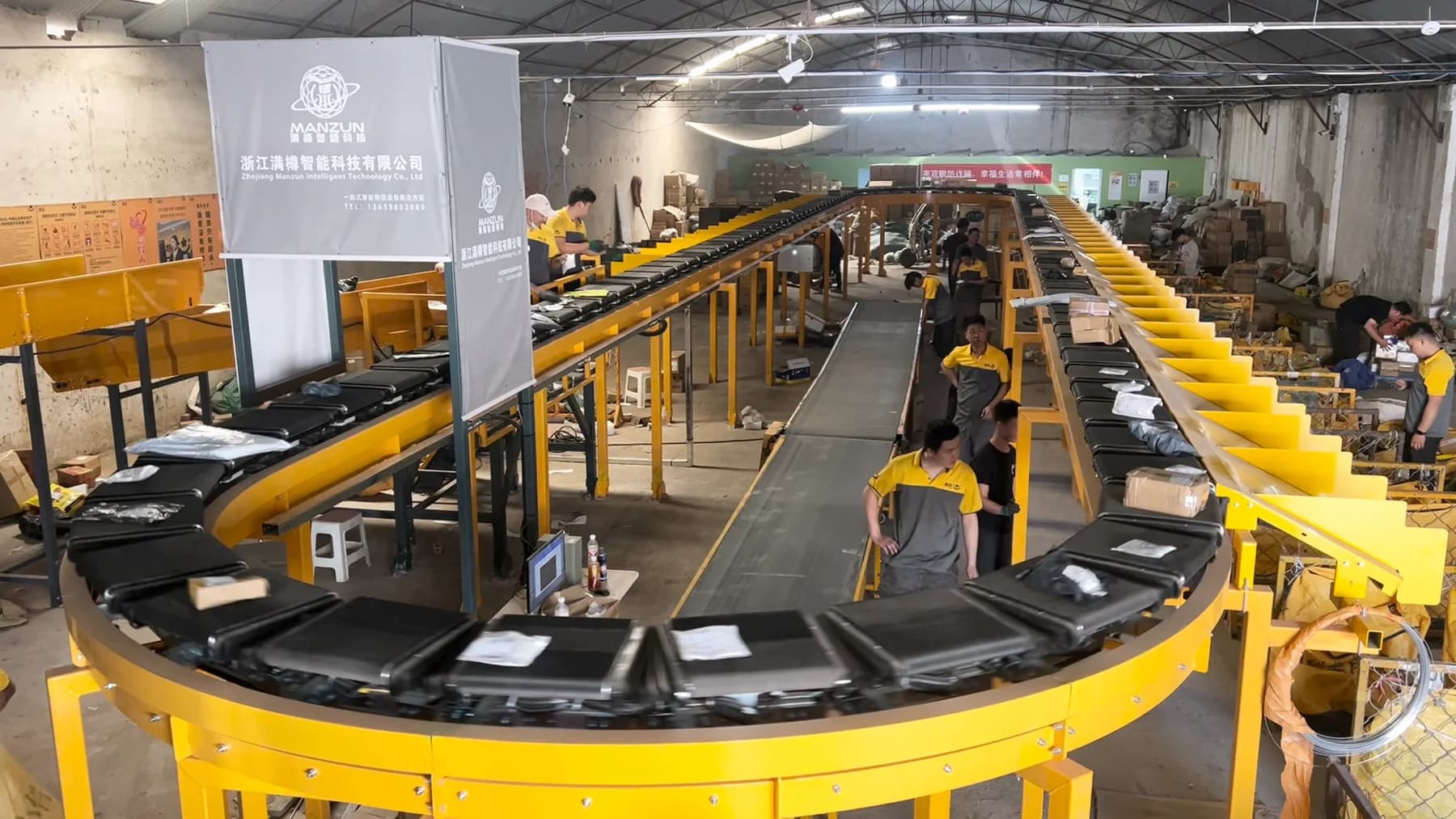
A lighter closed-loop architecture uses independently controlled carriers to route a defined parcel mix to a moderate number of destinations. Its value comes from matching a compact layout to a stable route and peak profile.
System boundary
A sorter is not a standalone mechanism. The following scope must be designed and accepted as one material-flow system.
- Compact loop track and carrier assemblies
- Manual or integrated induction stations
- Destination chutes and return path
- Controls, guarding and local maintenance access
Inputs required for configuration
- Peak-window volume rather than daily average
- Route count and future destination expansion
- Parcel range for the selected carrier pitch
- No-read, oversize and full-destination workflow
- Local installation, training and spare-parts ownership
Questions to answer before selection
- Are route counts and peak windows stable enough for a compact architecture?
- What happens to no-read, oversize and full-destination parcels?
- Can the layout preserve guarding and service access?
Evidence to request from a supplier
- A controlled parcel-envelope drawing with minimum and maximum dimensions and weights.
- Sustained throughput assumptions, including induction efficiency, no-read and recirculation.
- Layout drawings showing structure, access, guarding, controls and maintenance clearance.
- A factory acceptance test plan linked to the representative parcel set.
- A commissioning boundary and documented spare-parts strategy for the local partner.
PUBLISHED REFERENCES
Configuration evidence, not universal ratings.
These values come from named MANZUN material. They describe the cited configuration and must not be applied to a different layout without recalculation.
MANZUN positions this architecture for smaller and medium sorting locations. Exact cart count, chute count and throughput must follow a project layout.
View MANZUN source ↗